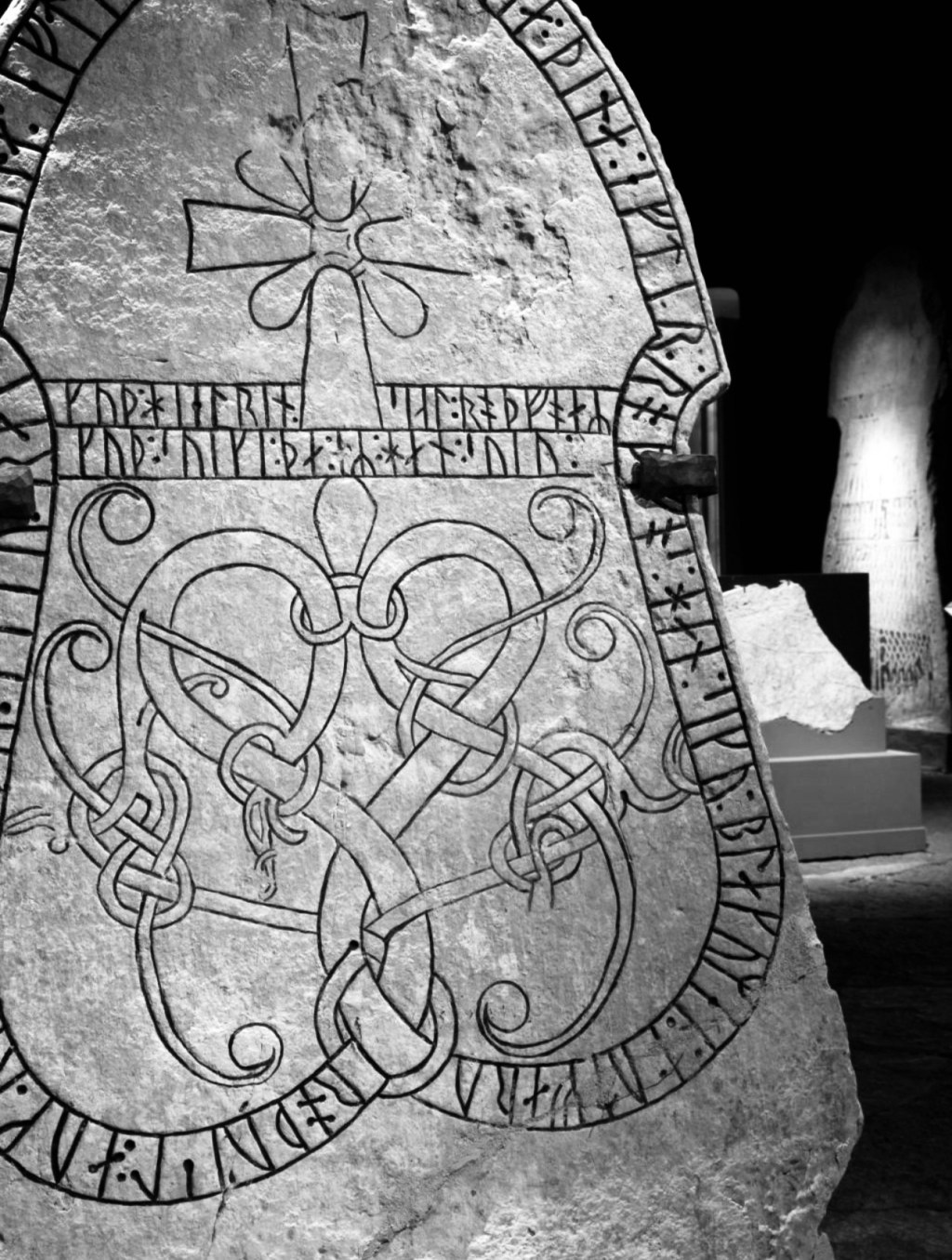
Let’s talk names. Specifically: Visby-the name that now evokes rose-lined ruins and quaint cafés may have started out with… slightly more metal origins.
According to linguistic sleuths, the name Visby may come from the Old Norse words “vis” (meaning sacrificial site) and “by” (meaning village). That’s right, before it became a Hanseatic power player, before the markets and the towers and the wool trade, Visby may have been known for its altar.
Picture this: a misty hilltop gathering of Vikings offering up sacrifices to the gods, with rune stones instead of receipts and longships docked like Uber rides at the shoreline. And somewhere nearby? The by-the village- where life carried on, with a side of divine appeasement.
It’s honestly kind of perfect. Even today, Visby feels like a place that straddles worlds- earth and myth, history and magic. The past here isn’t buried, it’s just weathered.
So when we arrive this summer and stroll through this stunning medieval town, we might also be walking across what was once a sacred, smoky Viking ritual ground. A little dramatic? Maybe. But hey-vis happens.

 Swedish Wanderlust