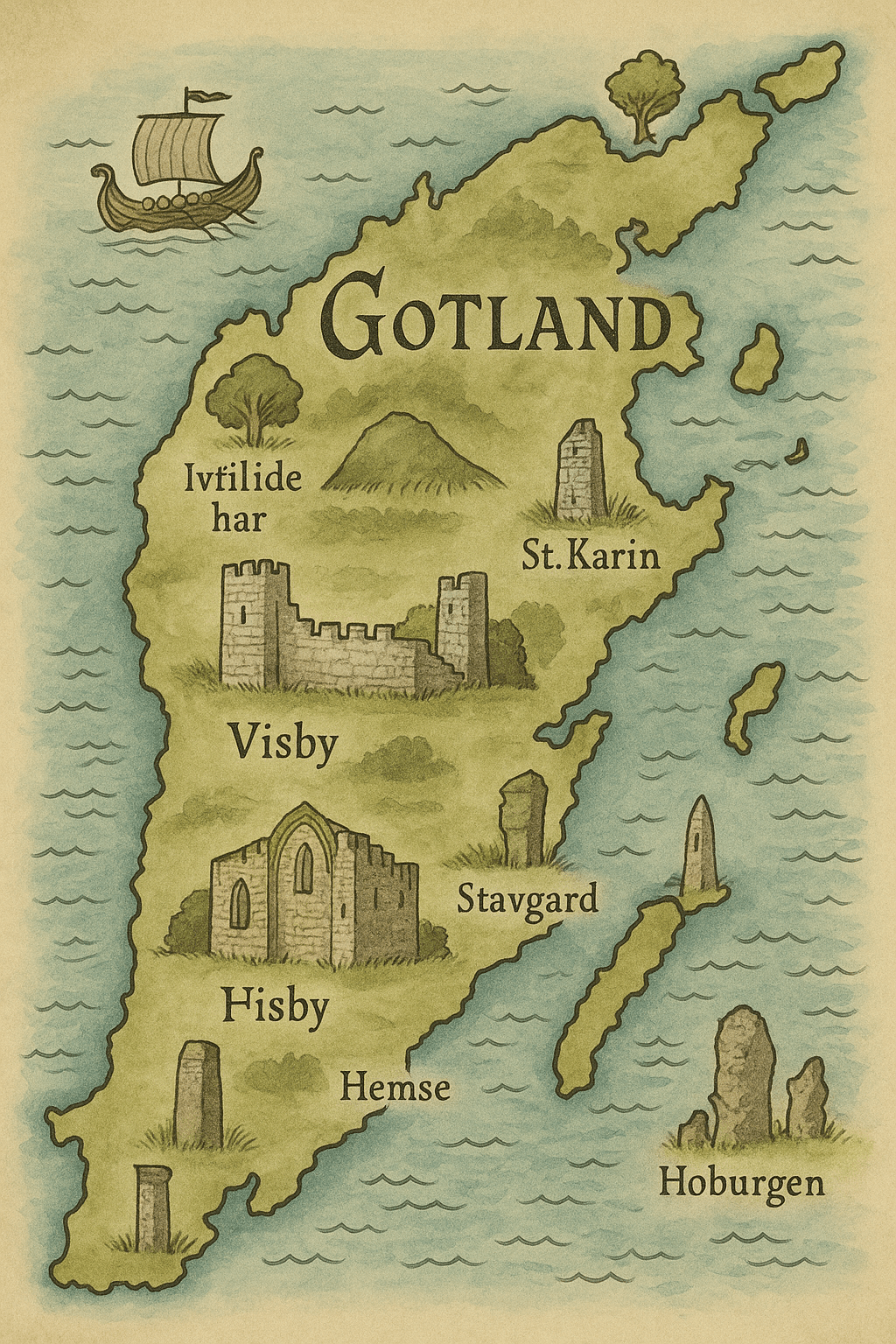
Visby is famous for its medieval walls—but not every tower here was built for knights. Some were built for warplanes.
During World War II, Sweden remained officially neutral, but the island of Gotland was in a precarious position: floating in the middle of the Baltic Sea, close to occupied territories, and watching a war that was just a little too close for comfort.
To protect itself, Sweden constructed a series of lookout towers—practical, weather-worn structures built not for beauty, but for vigilance. These towers stood like stone ghosts, their only job to scan the sea and sky for danger. Some had radios. Others had binoculars. All had one thing in common: they were meant to see first.
🕯 Why I’m So Into This
I haven’t been to Gotland yet, but the idea that this dreamy island of sheep and saffron pancakes also hid wartime watchers? That’s the kind of historical whiplash I live for.
I picture some lone soldier leaning into the wind on a stone balcony, scanning the horizon for movement—knowing every wave might hold a shadow. These towers weren’t heroic or glamorous. They were practical. Quiet. Necessary. And that makes them all the more haunting.
I want to find one. Stand where someone once stood with a radio and a notebook. Watch the sea not for war, but for the peace they hoped would last.
🇸🇪 Swedish Word of the Day
Utkikstorn (OOT-keek-storn) – Lookout tower
Used in a sentence:
“Om jag hittar ett gammalt utkikstorn, kommer jag att klättra upp – om inte för historien, så för utsikten.”
“If I find an old lookout tower, I’m climbing it—if not for history, then definitely for the view.”

 Swedish Wanderlust