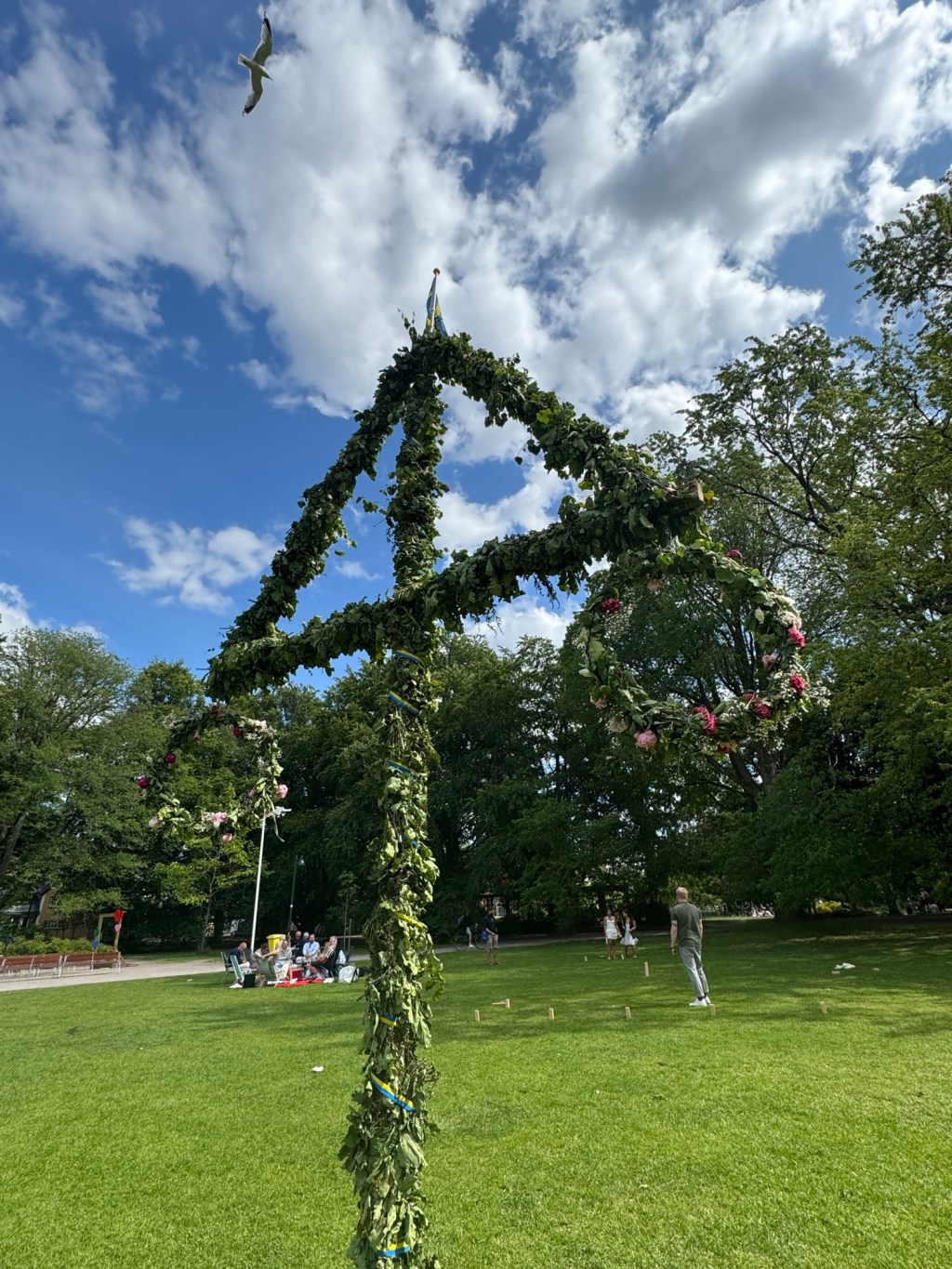
Each year in late June, Swedes don flower crowns, dance around maypoles, and toast to summer with pickled herring and snaps. But behind the joy and whimsy of Midsommar lies something far older, stranger, and more sacred: a pre-Christian celebration of the summer solstice, rooted in Norse cosmology, fertility cults, and agrarian survival.
☀️ A Holy Moment in the Wheel of the Year
In the Norse worldview, the summer solstice was not just a turning point of light—it was a portal. The longest day of the year marked a time when the veil between worlds thinned, and the boundary between human and divine was porous. Just as Yule (midwinter) honored death and rebirth, Midsommar exalted life at its peak—green, lush, and pulsing with power.
Although the Old Norse calendar didn’t align precisely with the solar calendar, midsummer rituals were known across pre-Christian Scandinavia and Germanic Europe, often tied to fertility, divination, and protection.
🌾 Fertility, Fire, and Sacrifice
Midsommar ceremonies likely centered on offerings to gods of fertility, agriculture, and sunlight:
Freyr, the Vanir god of fertility and good harvests, was a primary figure in summer rites. As attested in Ynglinga Saga (Snorri Sturluson, 13th c.), Freyr was worshipped with offerings of grain, livestock, and “peaceful seasons.” Nerthus, an earlier earth mother goddess described by the Roman historian Tacitus in Germania (ca. 98 CE), was venerated on an island in the North Sea (possibly Zealand or Gotland) in sacred groves, with ritual processions and sacrifices by drowning in lakes. Sol (or Sól), the sun goddess who drove the solar chariot, was another symbolic presence at solstice. While not explicitly tied to midsummer in myth, her imagery became part of folk tradition.
🔥 Bonfires were lit on hilltops and near fields—not merely for festivity, but as protective fire magic, driving away illness and evil spirits. This practice is echoed in later Christianized midsummer traditions in Sweden and the Baltic, where such fires persisted into the 19th century.
There is circumstantial evidence of ritual sacrifice—both animal and human—at major seasonal festivals. Excavations at sites like Gamla Uppsala (Old Uppsala, Sweden) have revealed burial mounds, sacrificial pits, and feasting remains dating to the Iron Age, suggesting large-scale ritual gatherings. The Adam of Bremen chronicle (Gesta Hammaburgensis Ecclesiae Pontificum, ca. 1070 CE) describes a temple at Uppsala where every ninth year, nine males of every species were sacrificed to the gods and their bodies displayed in a sacred grove.
While this likely refers to midwinter or autumn sacrifices, it shows the scale and seriousness of Norse ritual practice. Midsummer rites may have been less bloody but equally spiritual.
🌸 Syncretism and Survival
With the spread of Christianity, the church co-opted Midsommar, aligning it with the Feast of St. John the Baptist (June 24). But the old customs were never fully erased. The majstång (maypole)—a clear fertility symbol—is a 17th-century adoption of older Germanic traditions, possibly standing in for a world tree or phallic symbol of Freyr.
Folk magic also survived: unmarried girls still pick seven flowers from seven fields and place them under their pillows on Midsommar Eve to dream of their future husband. This is almost certainly a Christianized echo of pagan divination rites.
🌿 A Living Tradition
In modern Sweden, Midsommar is secular in name but sacred in rhythm. It connects people not only to nature but to a deeper cultural memory, one that transcends organized religion and reaches toward the ancient logic of the land.
It’s not just nostalgia—it’s continuity.
🧾 Sources & References
Tacitus, Germania, ca. 98 CE – Description of the goddess Nerthus and ritual practices among Germanic tribes. Adam of Bremen, Gesta Hammaburgensis Ecclesiae Pontificum, ca. 1070 – Describes sacrifices at Gamla Uppsala. Snorri Sturluson, Ynglinga Saga, 13th c. – Worship of Freyr and seasonal rites. Price, Neil. The Viking Way: Magic and Mind in Late Iron Age Scandinavia, Oxbow Books, 2019 – Deep analysis of Norse ritual, magic, and cosmology. Sundqvist, Olof. An Arena for Higher Powers: Ceremonial Buildings and Religious Strategies for Rulership in Late Iron Age Scandinavia, Brill, 2016. Hutton, Ronald. The Stations of the Sun: A History of the Ritual Year in Britain, Oxford University Press, 1996 – Insight into midsummer rites and syncretism across

 Swedish Wanderlust