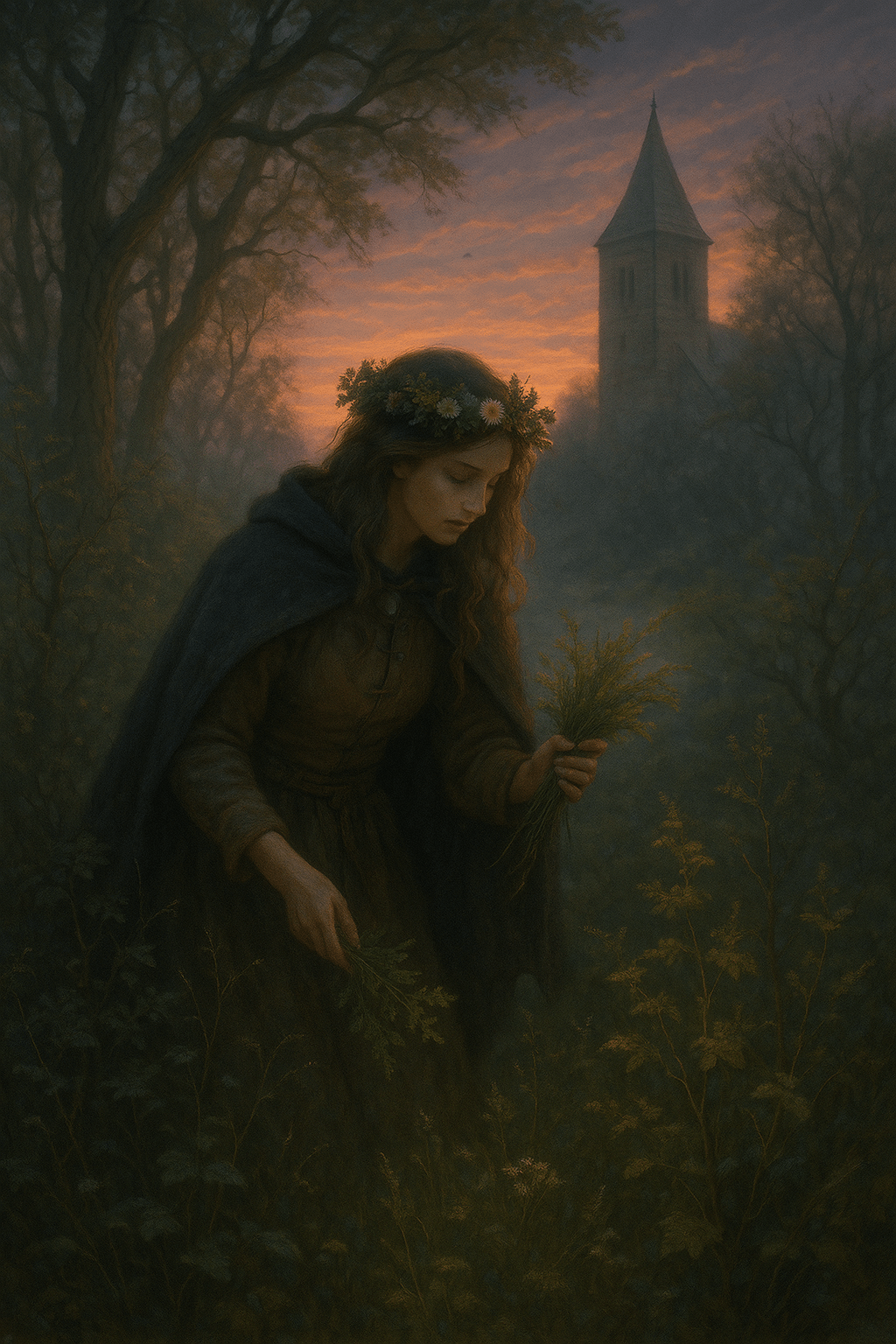
Gotland has always been a little wild — wind-carved, sea-wrapped, and steeped in silence. And in places like that, the lines between healer, wise woman, and witch tend to blur.
In the medieval and early modern era, witches weren’t broomstick-riding caricatures. They were herbalists, midwives, and women who knew things men didn’t — about birth, plants, weather, and survival. That alone was enough to make them dangerous.
On Gotland, the church and crown did hunt witches. Not in Visby itself, but in parishes like Othem and Fårö during the 1600s. Testimonies included tales of flying through the night, ruining milk, and whispering to things that shouldn’t listen. In truth, most of it came down to fear. Or jealousy. Or a cow that got sick.
But not all the stories ended in fire.
Many of Gotland’s “witches” simply outlived the stories — passing down charms, cures, and secrets disguised as folklore. Protective amulets have been found carved into door frames. Rune-like symbols in clay pots. Recipes scratched into the margins of church ledgers.
These weren’t spells for power. They were for survival.
When I walk through Visby this August, I don’t expect to find witches.
But if I do, I hope they like me. I’ll bring flowers. And mugwort.
Swedish Word of the Day: Häxa (noun) – witch 🧙♀️
(På Gotland var häxan inte ond – bara farlig för fel sorts män.
– On Gotland, the witch wasn’t evil — just dangerous to the wrong kind of man.)

 Swedish Wanderlust