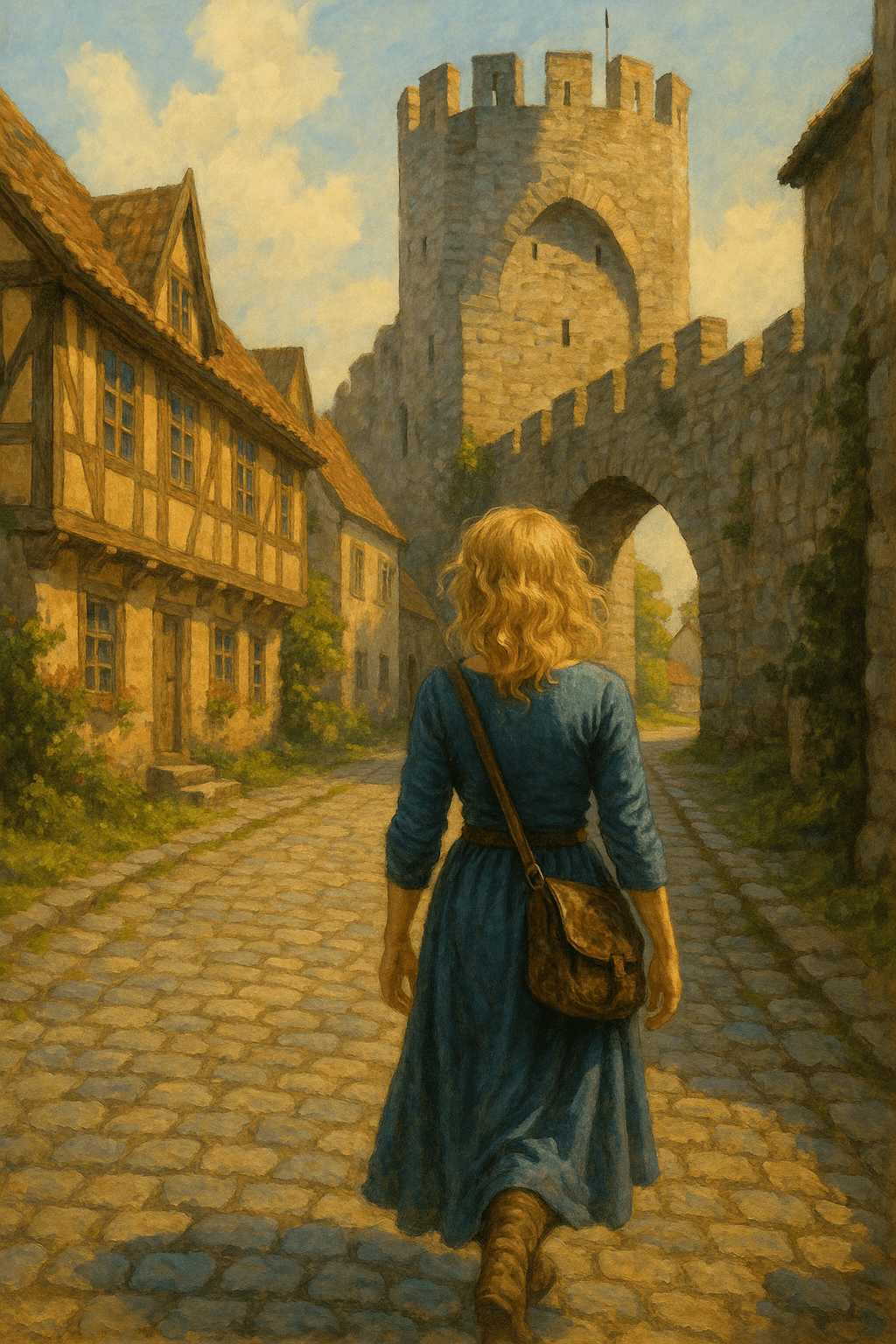
Today marks 35 days until I finally step foot into Visby for Medieval Week — and I already know exactly where I’ll head first: the market.
Not because I need a sword (although let’s be honest, I might), but because that’s where Visby’s past still hums the loudest.
In the 12th to 14th centuries, Visby wasn’t just a charming seaside town — it was the beating heart of Baltic trade.
A Hanseatic hotbed. A medieval melting pot.
A place where pirates and monks stood side by side arguing over salted fish prices.
Picture this:
Foreign traders from the east shouting over barrels of beeswax Scandinavian fishwives swearing in six dialects Drunken Germans singing in a money-laced choir of “Buy low! Sell high! Hide your silver!” Novgorod merchants haggling with Visby’s wool dealers using Islamic dirhams A bishop scowling from the steps of the church as alewives flirted their way to better margins
The smell? A potent mix of smoked herring, sweaty leather, mead, and ambition.
The noise? Absolute bedlam.
The rules? Mostly ignored.
But underneath the chaos was something magical — a network of relationships, risks, and rituals that fueled the economy of an entire region. And in that swirl of coin and conflict, Visby became legendary.
This August, when I step into that reenacted market, I won’t just be looking for trinkets.
I’ll be listening for echoes.
For the laughter of women who made coin when the law said they couldn’t.
For the muttering of men trying not to get swindled by children in aprons.
For the ghosts of a world that never fully disappeared — it just got paved over with souvenir stands.
Swedish Word of the Day: marknad (noun) – market
(Kaos, karaktär och köpslående – precis som det alltid har varit.
– Chaos, character, and bargaining — just like it’s always been.)

 Swedish Wanderlust