There are stories you uncover on purpose — tucked in books, behind museum glass, waiting politely to be remembered.
And then there are the stories that dig themselves up.
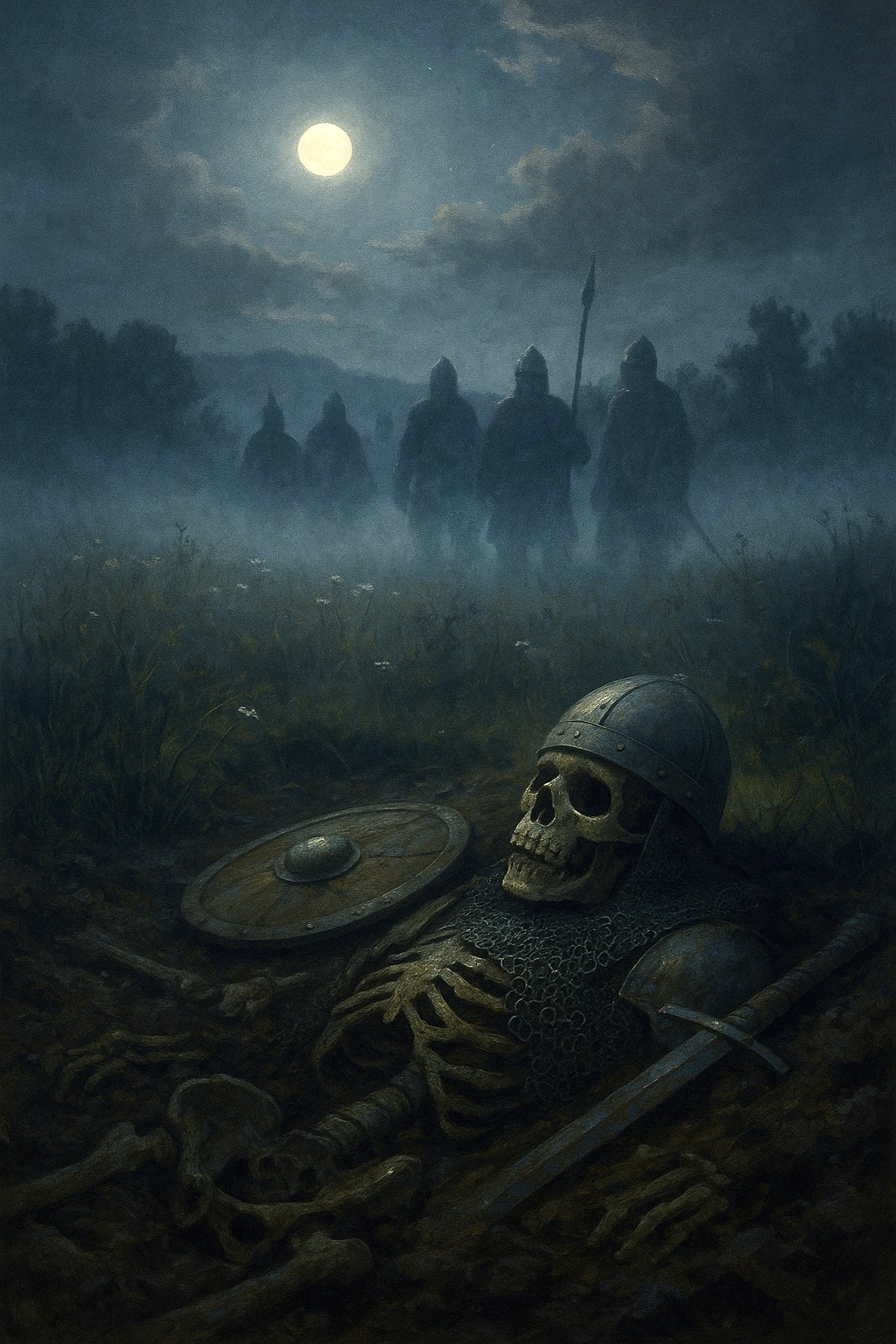
In 1905, just outside Visby’s walls, a farmer and his shovel struck something strange.
Not treasure.
Not ruins.
A leg bone. Then a skull. Then dozens more.
All still wearing armor.
They’d uncovered the mass graves of the Battle of Visby, fought in 1361, when Danish forces landed on Gotland’s shores and marched toward the walled city. Waiting for them were not knights or kings… but farmers, fishermen, merchants, and boys — called up in desperation to defend their home.
Many had never seen combat.
Some barely had armor.
Some wore mail stitched into leather jackets.
Some were children.
When the battle was over, up to 2,000 were dead in a single day — the kind of loss that stains the earth.
But here’s what makes this site different:
The bodies weren’t stripped.
Their gear was intact. Their bones weren’t moved.
It’s one of the few medieval battlefields where the fallen were buried just as they fell.
Their skeletons still show:
Skulls crushed by maces Spines split by arrows Humerus bones shattered mid-swing
They weren’t warriors. But they were brave.
And that, apparently, wasn’t enough.
In 34 days, I’ll be walking the paths they died on.
There’s no plaque grand enough to explain that kind of loss.
No reenactment that can replicate the moment a child realizes he’s about to die with a pitchfork in his hand.
But I’ll walk anyway.
Because the bones are still there.
And bones, unlike legends, don’t exaggerate.
They just quietly testify.
Swedish Word of the Day: ben (noun) – bone
(Ben glömmer inte. De väntar.
– Bones do not forget. They wait.)

 Swedish Wanderlust