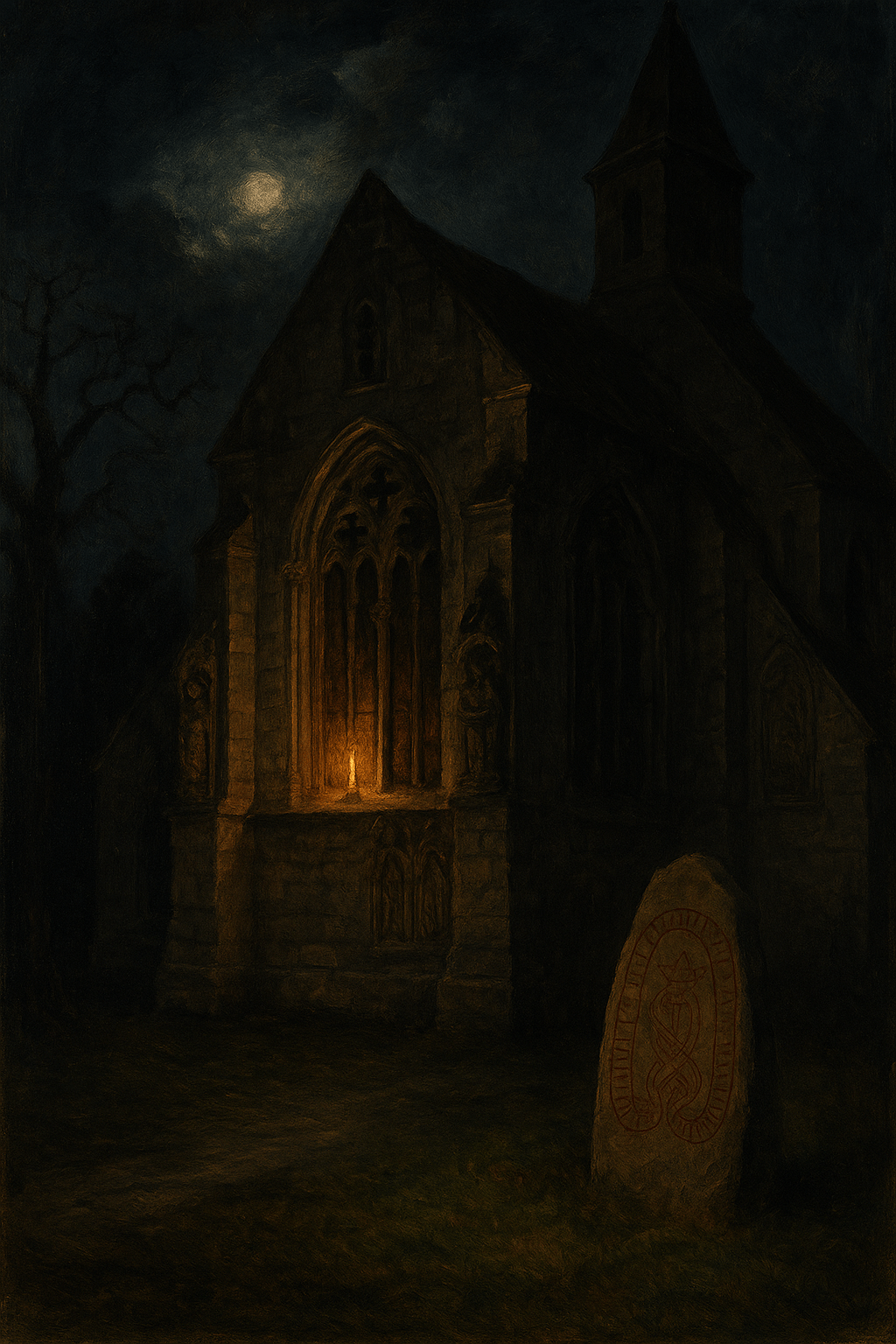
In the medieval world, faith wasn’t a tidy thing.
It was messy. Layered.
Born of desperation, tradition, and the “just in case.”
And in Gotland — this ancient island with its rune stones, crumbling churches, and pagan bones beneath Christian altars — belief was survival.
You prayed to saints.
You left offerings by springs.
You traced your fingers along old carvings, not entirely sure if they were holy or haunted.
You lit a candle for Saint Olaf…
but also whispered to the old birch tree near the well.
Because your grandmother said it helped.
And she was right about everything else.
You recited a Hail Mary when your child got sick… but also slipped a carved amulet under the pillow.
Because belief, back then, wasn’t about orthodoxy.
It was about hedging your bets.
And the Church knew it.
That’s why they carved dragons into cathedrals and saints into former stone circles.
That’s why the holy and the heathen still sit together on Gotland’s old walls — staring out at the Baltic, sharing the silence.
In 31 days, I’ll be there.
And I won’t ask who’s watching.
Just that someone — or something — always was.
Swedish Word of the Day: tro (noun) – belief, faith
(Tron var aldrig ren. Den var mänsklig.
– Faith was never pure. It was human.)

 Swedish Wanderlust