
Before Visby.
Before the Vikings.
Before runestones and ruins and ferry tickets… there was fire.
And the man who brought it was Tjelvar.
According to Gotlandic legend, the island used to sink into the sea during the day and rise again at night. It wasn’t until Tjelvar arrived—carrying fire—that the land stayed above water permanently. In that moment, Gotland became habitable. And history could begin.
🪨 Tjelvar’s Grave Still Stands
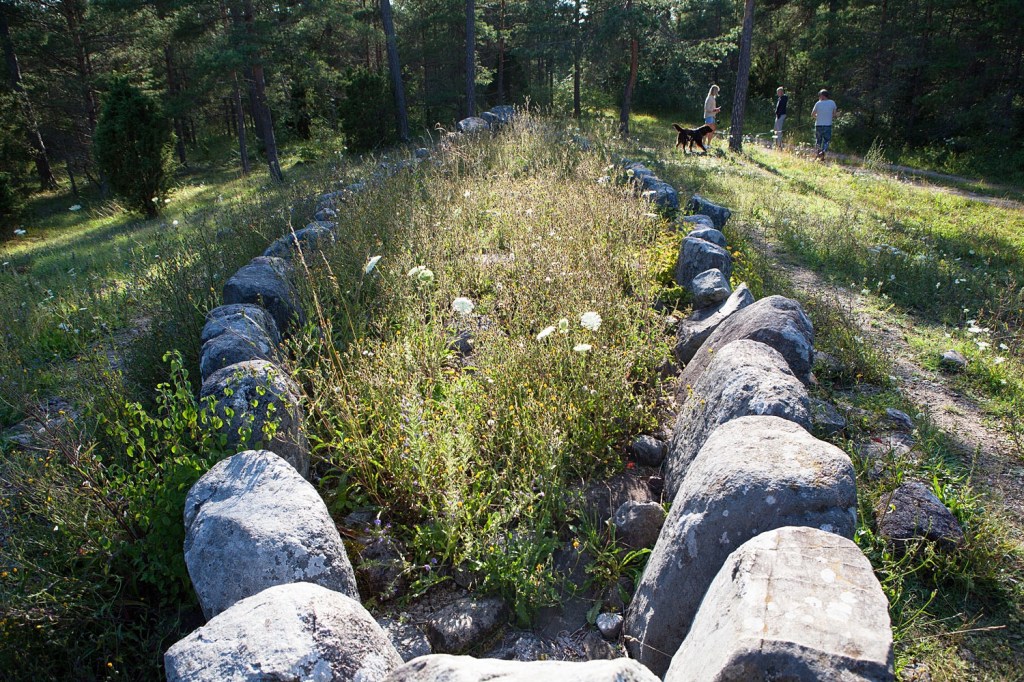
Just outside Boge, on Gotland’s eastern side, lies Tjelvars grav—a massive Bronze Age stone ship setting, one of the best preserved on the island.
It’s shaped like a vessel meant for the afterlife, just like the Salme ship burials in Estonia… where my own DNA has been found.
The symmetry is eerie:
Tjelvar brings fire and stays.
My ancestors bring fire and sail.
And now, I’m the one returning.
🧬 Why This Hits Different
I’ve written a lot about my J maternal haplogroup—how it links me to VK58 in Fröjel, to Salme 2 in Estonia, to women buried with jewelry and legacy.
But Tjelvar’s story isn’t just about men.
It’s about what happens when the fire arrives.
It’s about transformation, belonging, and the beginning of something permanent.
He brought the flame.
The island stayed.
And generations followed.
✨ Fire Is a Metaphor, Too
• It illuminates what’s hidden
• It warms what’s cold
• It signals you’ve arrived
• And sometimes, it’s passed from hand to hand across centuries
So here I am.
15 days from landing on Gotland.
Carrying my own kind of fire—memory, DNA, longing, hiraeth.
And walking toward the stones where the first spark was laid.
🇸🇪 Swedish Word of the Day: “eld”
Eld (noun) – fire
Used in a sentence:
Tjelvar kom med eld, och Gotland stannade kvar.
(Tjelvar came with fire, and Gotland remained.)

Here are authentic images of Tjelvar’s Grave (Tjelvars grav)—the Bronze Age ship-setting near Boge, imprinted with legend and stones that endure time and tide.


 Swedish Wanderlust
You must be logged in to post a comment.