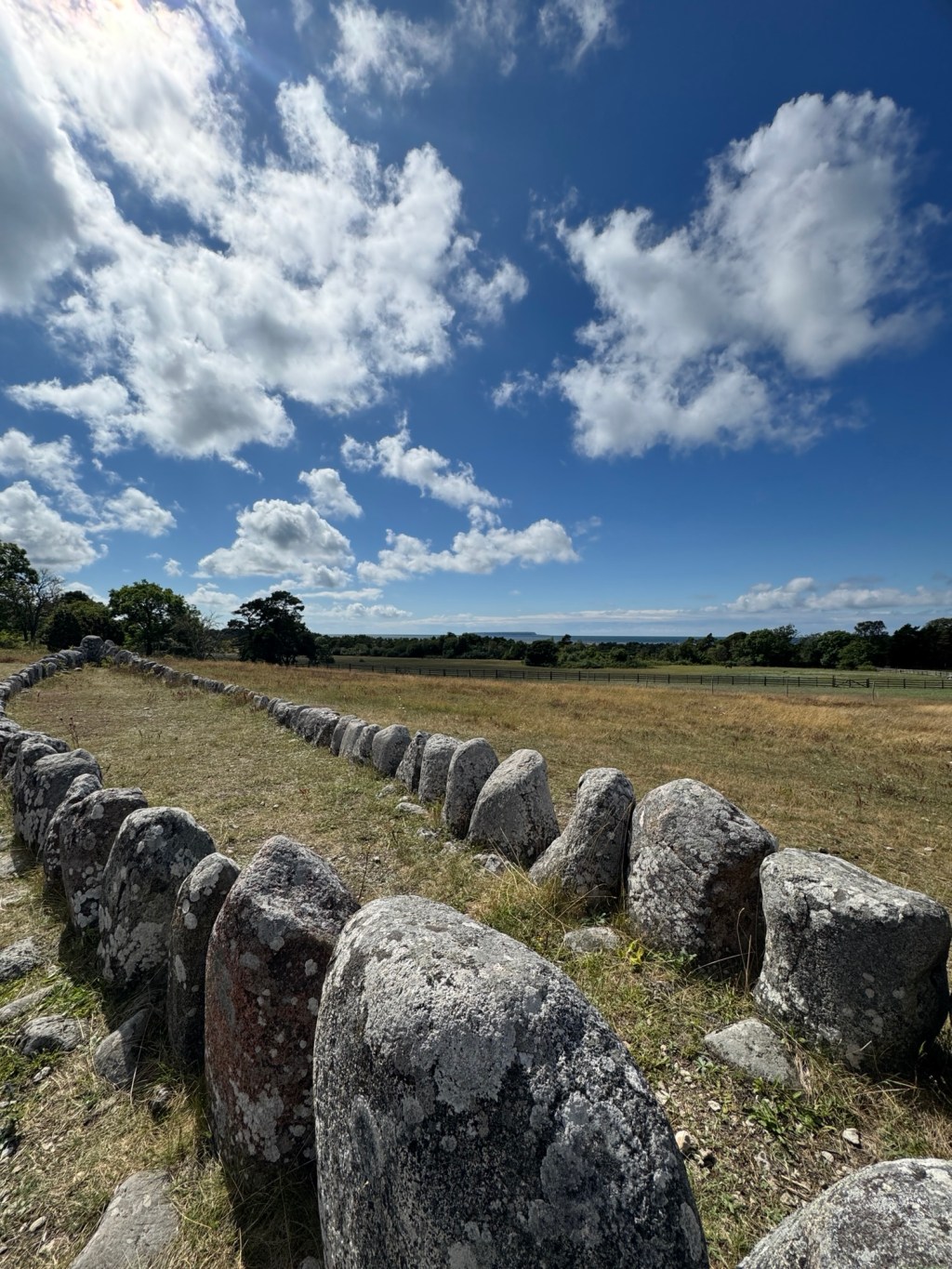
Today felt like a real step forward. I made contact with Dr. Dan Carlsson—archaeologist, Gotland expert, and a key figure in the Fröjel research that first led me to VK429. He kindly replied (🥳), and even though there’s still work to do, I’m officially closer to understanding who VK429 was and how her grave fits into the wider story of Fröjel.
Quick refresher: Who is VK429?
VK429 is an individual from the Fröjel area on Gotland whose genome appears in an ancient DNA dataset I’ve been studying. I’ve been exploring a possible connection to her through my own genetic research and maternal haplogroup work. While I can’t (and won’t) claim definitive ancestry, VK429 has become a focal point for understanding the lives of women in Viking-Age Gotland—trade, faith, fashion, health, and everyday choices encoded in a single burial.
Why Dr. Carlsson matters
If you’ve followed my Visby/Fröjel posts, you’ll recognize Dr. Carlsson’s name. He’s led excavations and syntheses of the Fröjel harbor area—one of the most important Viking-Age sites for understanding Baltic trade and cultural exchange. Getting guidance from him is the difference between “internet sleuthing” and actually locating the archival trail: field notes, grave registers, context sheets, and the excavation report that can confirm which grave VK429 corresponds to in the ground.
What I asked for (and why)
I wrote with the specifics I have: the VK429 identifier from the genetic dataset, approximate date ranges for the Fröjel fieldwork, and clues about material culture linked to the harbor settlement. I also admitted what I don’t know (because: archives, acronyms, and ever-evolving datasets). My goal is simple: match the lab ID “VK429” to a burial record—grave number, trench, year of excavation, and any catalogued finds. That match would unlock the story: age-at-death estimates, isotopes (if sampled), pathology, and, if recorded, the grave goods that can tell us about status, belief, and daily life.
Why this is tricky
Ancient DNA labels aren’t the same as grave numbers. Samples can be re-labeled in the lab, moved between projects, or cited differently across papers and preprints. Meanwhile, some Fröjel materials are still part of ongoing or past doctoral research (read: not always public yet). So “VK429” might map to “Grave X, Fröjel, Year Y” in one place and something slightly different in another. That’s why an archaeologist’s confirmation is gold.
What this could reveal
- Grave context: Was VK429 in a churchyard phase or earlier settlement phase? Inhumation or cremation? Orientation?
- Material culture: Jewelry, beads, dress fittings, spindle whorls, coins—any of these could situate VK429 socially and economically.
- Lifeways: Isotopes (if available) can hint at mobility and diet; osteology can speak to health, workload, and care.
- Community: Fröjel’s harbor was a crossroads. If we place VK429 firmly in that landscape, we can talk about networks—from Gotland to the eastern Baltic and beyond.
Where I am now
- ✅ Made contact with Dr. Carlsson today.
- 🔎 Compiling every cross-reference I have (dataset IDs, excavation years, report titles, and any museum/archive call numbers).
- 🧭 Lining up the paper trail: field reports → grave register → lab/sample mapping → published/unpublished notes.
- 🧵 Keeping my expectations honest: some details may be restricted or take time to surface, especially if they’re tied to dissertations or museum cataloging.
How you can help
If you’ve worked with Fröjel materials—or you know where specific Fröjel grave registers live—feel free to reach out. Even a hint about where the burial lists were archived (university department? museum? field office?) could shorten the path.
What’s next
I’ll share an update as soon as I can confirm the excavation year and grave number tied to VK429. That single match will let me move from “ID in a dataset” to a person in a place—with soil underfoot, neighbors in the cemetery, and objects placed with care.
Thanks for following along as I piece this together. This journey has been equal parts archive-diving, DNA nerdery, and standing in the Gotland wind imagining the harbor as it once was. Today, though, it feels a little less like imagination and a little more like finding the thread.
P.S. If you’re new here and wondering why I care so much about VK429: I’m exploring possible ancestral links and, more broadly, the story of women in Viking-Age Gotland. Even without definitive ancestry, VK429 is a window into that world—and I’m determined to see it clearly.

 Swedish Wanderlust