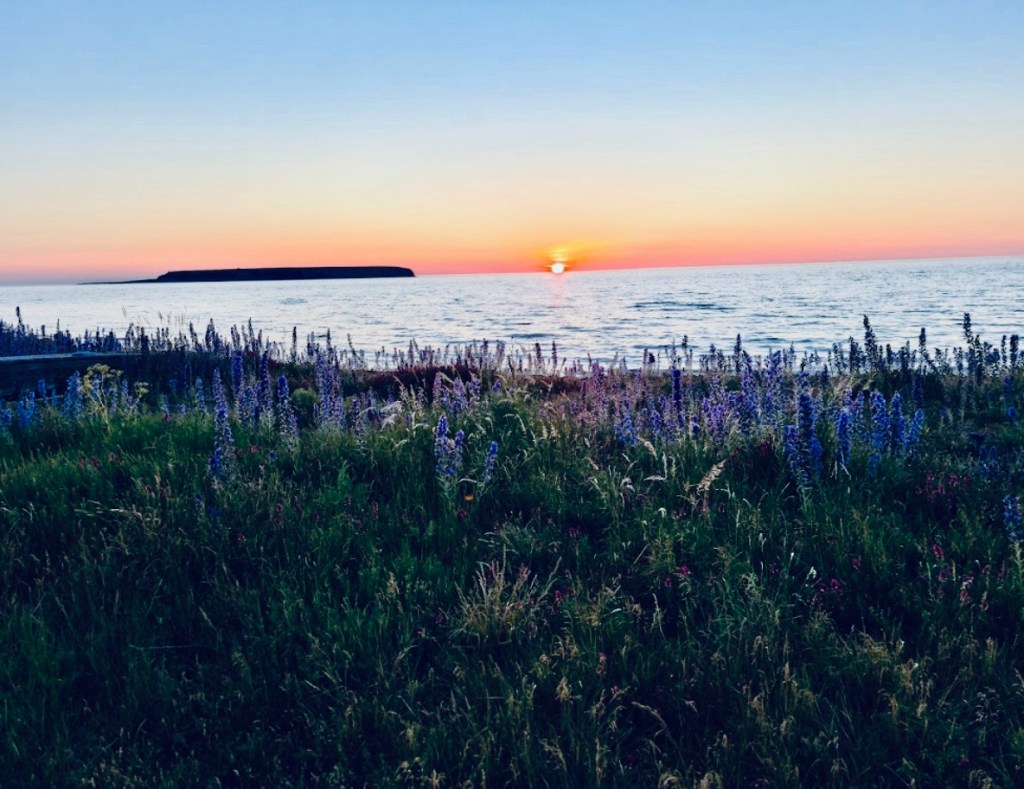
If you stand on the western shore of Gotland, where the Baltic’s winds roll in and the light shifts silver over the water, you can almost see it — the Viking harbor of Fröjel as it was a thousand years ago. Ships with striped sails leaning against the horizon. The smell of tar, fish, and woodsmoke. Traders haggling in languages from across the Baltic and beyond.
This wasn’t just a fishing village. Fröjel was a bustling hub of exchange, a place where goods, news, and ideas passed through like tides. Archaeologists have found evidence of workshops, imported glass beads, silver coins, and tools from as far away as the Middle East. It was a world in miniature — cosmopolitan, noisy, alive.
Somewhere in this thriving community lived VK429. I know her not from a gravestone or written record, but from DNA — a match to my own on MyTrueAncestry. Her genetic signal connects me, across a millennium, to this windswept coast.
We don’t yet know the exact location of her grave, but the settlement gives us clues. Was she part of a trading family? Did she walk the packed dirt paths between market stalls, fingertips brushing bolts of imported silk? Was she a craftswoman, shaping beads from molten glass in the glow of a hearth? Or perhaps she tended a home overlooking the harbor, waiting for a loved one to return from the sea.
Many Viking-Age women in Gotland were buried with keys — not small trinkets, but large, ornate symbols worn proudly on their belts. In life, a key signified authority over the household, storerooms, and sometimes even trade goods. In death, it was a final declaration of status and trust: here lies a woman who held the power to unlock the family’s wealth and resources. If VK429 was buried with such a key, it would speak to her role as the keeper of her household’s prosperity, a guardian of both material and symbolic treasures.
The Fröjel excavations show us that this was a place where women played active roles in commerce, faith, and community. Many burials from the area include not just jewelry and keys, but also weights — tools of trade that suggest women managed transactions and markets. If VK429’s grave was among them, her story could be one of movement, agency, and connection in an age often imagined as male-dominated.
Today, the harbor is quiet. Grass grows where warehouses once stood, and the only sails on the horizon are leisure craft. But the wind still carries the same salt and the same sense of arrival. For me, knowing I share a genetic link to someone who lived and died here transforms the view. It’s not just a beautiful coastline — it’s part of my own deep past.
And so, while I continue searching for the records that will place her exactly in Fröjel’s cemetery, I picture her here: VK429, framed against the Baltic, a woman of Fröjel, a life intertwined with the tides.

 Swedish Wanderlust