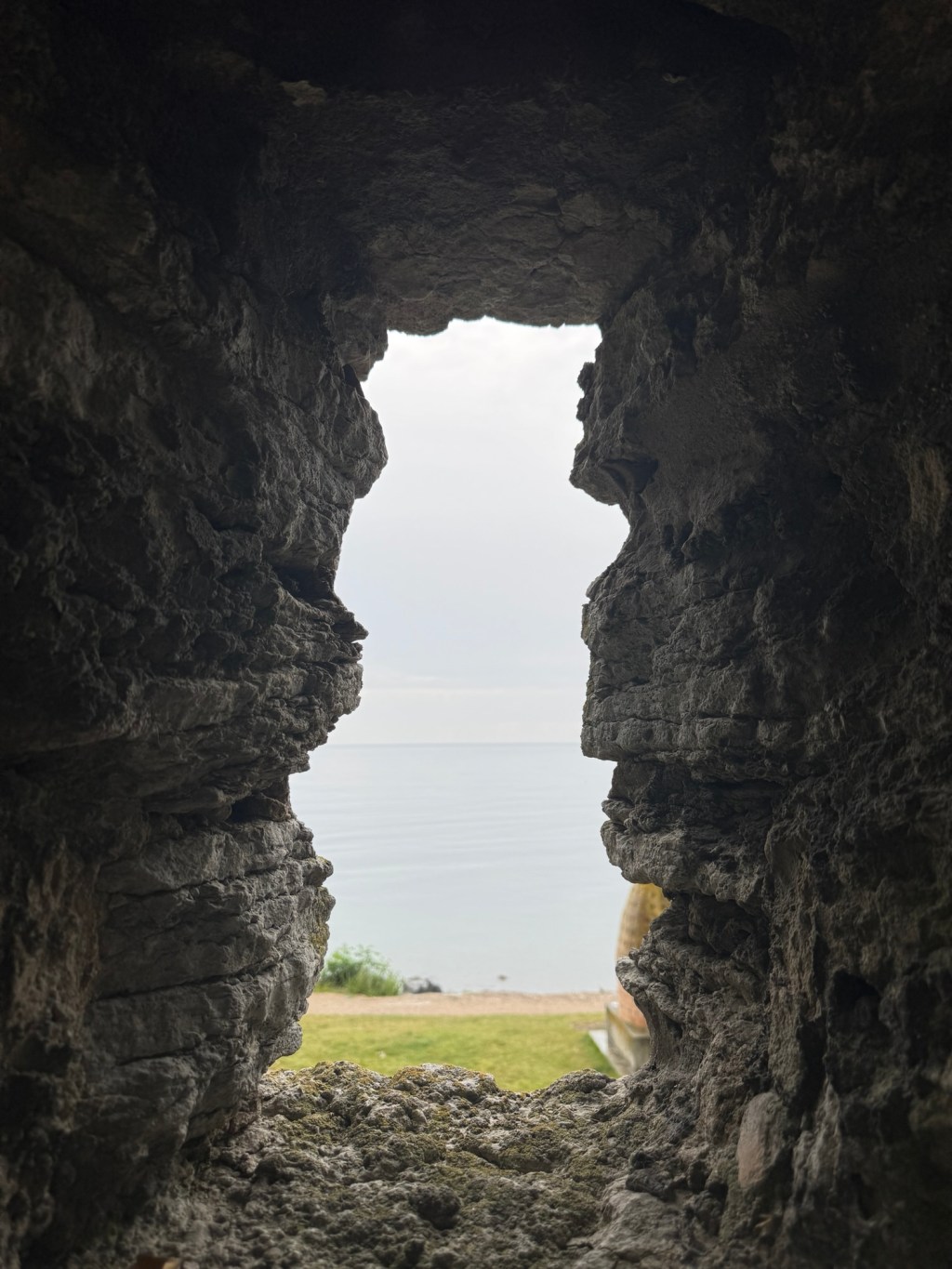
Summer is slipping away, and nearly three weeks after Visby’s Medieval Week, I’m starting to feel the shift. The air is cooler in the mornings, the light is softer in the evenings, and the sun sets earlier now. Visby feels both close enough to touch and already like a dream.
But I’m carrying its echoes with me. The clink of armor in the parade, the laughter spilling from candlelit taverns, the smoky scent of tar on ship masts, and yes—the ghostly figure I saw at the Clarion Wisby. That spöke (ghost) hasn’t left my mind. Was it a trick of light? A wandering memory? Or just one of Visby’s many restless souls?
It wouldn’t be surprising. Visby has been called the city of ruins and roses—a place where history refuses to stay buried. The medieval city wall, still intact after more than 700 years, surrounds a labyrinth of cobbled streets and crumbling churches. Each ruin tells a story:
-St. Nicolai Church, built in the 1230s by Dominican friars, still towers above the town even though it has stood roofless since the 1500s. Concerts are held there now, blending past and present.
-St. Karin’s Church, with its soaring Gothic arches, was once part of a Franciscan monastery. Now it’s a silent skeleton, open to the sky.
-The old Hanseatic warehouses near the harbor remind you that Visby wasn’t just Swedish—it was once a powerful member of the Hanseatic League, a medieval trading network that stretched from London to Novgorod.
With so much layered history, it makes sense that Visby feels alive with presences both seen and unseen. My ghostly encounter at the Clarion Wisby is just one more story added to centuries of them. After all, the hotel itself dates back to medieval packhouses from the 1200s, later converted into a 19th-century inn, and finally into the hotel it is today. It has held travelers for centuries—why not a few spirits, too?
Back here on the mainland, my days feel less like a festival and more like a balancing act between two very different adventures:
-The Gothic one → following haunted ruins, folklore, and ghost stories across Sweden.
-The everyday one → attending SFI (Svenska för invandrare), where my biggest battles aren’t with knights or phantoms, but with Swedish vowels, plurals, and those famously tricky “sj-sounds.”
Some days I leave class feeling like I’ve conquered a dragon. Other days, the dragon eats me whole. But each new word is a doorway—another key to unlocking Sweden, to belonging here, to understanding the stories that echo through its forests, ruins, and city streets.
So here I am, living between ghosts and grammar. Between history and the present. Between the country I came from and the one I’m slowly learning to call home. And honestly? I wouldn’t have it any other way.
Swedish Word of the Day: hösten — autumn. Because it’s creeping in, carrying both new routines and new mysteries.

 Swedish Wanderlust