This blog will be written in both Swedish and English going forward.
🇸🇪
När jag började läsa om Gotlands arkeologi såg jag ofta ett namn: Fröjel. Den här platsen ligger på västkusten av Gotland och var en hamn under vikingatiden. Fröjel är mer än bara ett fält med gamla stenar. Det är en plats där vi kan förstå handel, tro och vardagsliv. För mig är Fröjel också viktigt för att förstå min egen historia och känsla av hem.
Varför Fröjel är viktigt för mig
Jag kom till Sverige med stort intresse för historia och släktforskning. Gotland lockade mig direkt. Mitt arbete med DNA och vikingar ledde mig till platser som Salme i Estland och Fröjel på Gotland. Kvinnor som blev begravda här med spännen, nycklar och pärlor levde i en tid av förändring. De bar ansvar för familj och hushåll. Deras gravar berättar om deras liv.
Hamnen och människorna
Arkeologer började gräva i Fröjel på 1980-talet, lett av Dan Carlsson. De fann mycket som ändrade bilden av vikingatidens Gotland. Fröjel var inte bara en by. Det var en stor handelsplats som kan jämföras med Birka eller Hedeby.
Man fann:
-Gravar med män och kvinnor, med smycken, vapen och vardagsföremål.
-Importerade saker som glas från öst, pärlor och ett dekorerat ägg från Kiev.
-Silver och mynt, en del av Gotlands rikedom.
-Hantverk, till exempel pärltillverkning och textilier.
-Tecken på våld och förändring, som skador på skelett och övergången från hedniska till kristna gravar.
Varför platsen är viktig för arkeologi
Fröjel visar att Gotland inte var isolerat. Det var öppet mot världen och en del av handelsvägarna. Här kan vi se både vardag och kontakter långt bort, från brunnar och härdar till mynt från den islamiska världen.
Fröjel visar också förändring. Här kan forskare se skillnaden mellan hedniska gravar med spännen och pärlor, och senare kristna gravar utan gåvor.
En resa genom arkiven
Under de nästa 30 dagarna delar jag material från utgrävningarna: kartor, anteckningar och tidningsartiklar. Varje del är ett fragment av berättelsen om Fröjel, och tillsammans visar de en livlig vikingahamn.
🇬🇧
When I first began exploring Gotland’s archaeology, one site kept appearing again and again: Fröjel. This harbor settlement on the island’s west coast, active during the Viking Age and into the early Middle Ages, is more than just a cluster of ruins in a field. It is a place where the archaeology of trade, belief, and everyday life meet… and for me, it has become a touchstone in understanding both Gotland and my own sense of belonging.
Why Fröjel matters to me
I came to Sweden with a deep interest in history and genealogy, and Gotland drew me in immediately. My research into DNA and Viking-era ancestry led me to sites like Salme in Estonia and Fröjel on Gotland. The archives show that women buried here: with brooches, keys, and beads lived at a cultural crossroads. They carried the weight of family, household, and trade, and they were laid to rest in ways that still speak across the centuries. In many ways, exploring Fröjel is also about exploring identity: how communities define themselves, and how individuals are remembered.
The harbor and its people
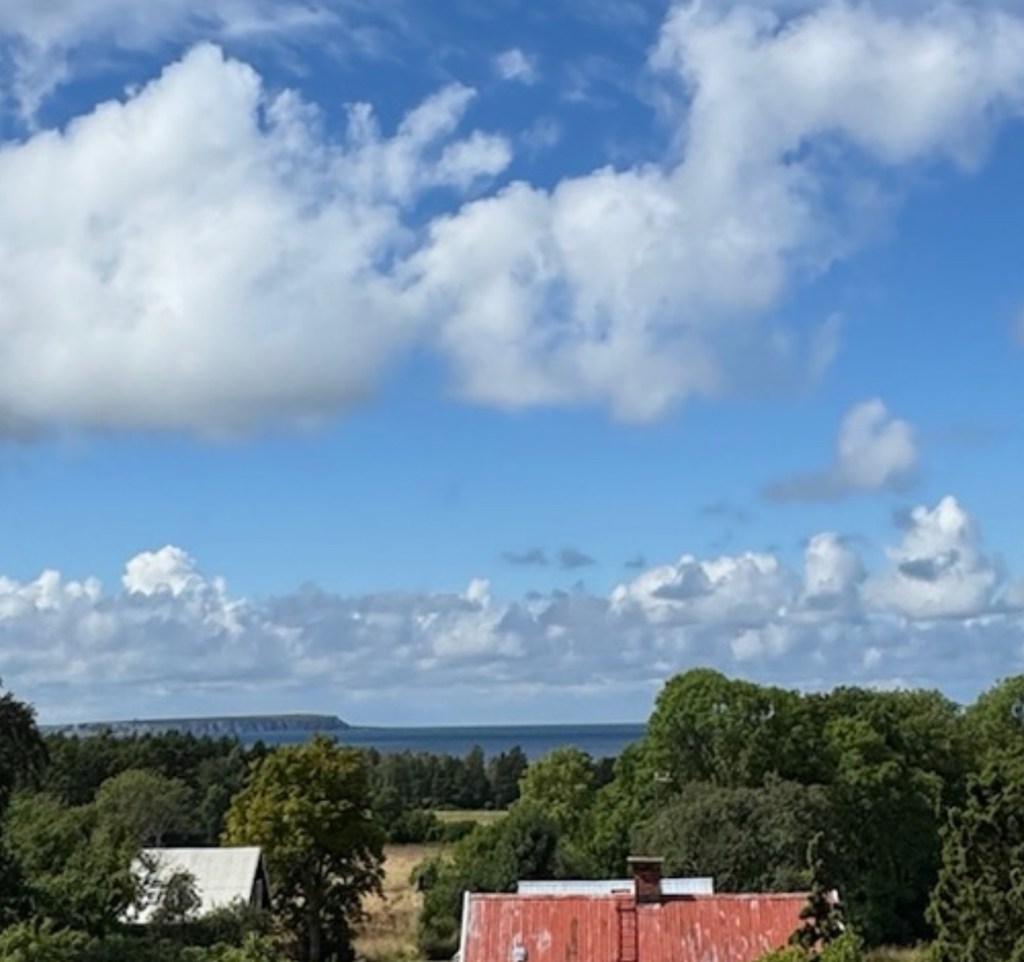
Archaeologists began large-scale excavations at Fröjel in the 1980s, led by Dr. Dan Carlsson. What they found rewrote the story of Viking Gotland. Fröjel was not just a local village; it was a MAJOR trading hub, comparable to Birka or Hedeby. The harbor opened directly to the Baltic Sea, with the islands of Stora and Lilla Karlsö serving as navigation points.
Excavations revealed:
-Graves with both men and women, richly furnished with jewelry, weapons, and everyday tools.
-Imported goods like glass from the east, beads, and even a decorated egg-shaped object from Kiev.
-Silver coins and hoards, part of Gotland’s extraordinary wealth in the Viking Age.
-Evidence of craft production, including bead-making and textiles.
-Signs of violence and change, from battle wounds on skeletons to the shift from pagan to Christian burial customs.
Why it matters to archaeology
Fröjel is important because it shows us that Viking Age Gotland was not isolated. It was cosmopolitan, outward-looking, and deeply entangled in Baltic and global trade. The site reveals both everyday life and extraordinary connections: from wells and hearths to silver coins minted in the Islamic world.
It also illustrates transition. In Fröjel, archaeologists can trace the movement from pagan Viking traditions: burials with brooches, beads, and keys into the Christian Middle Ages, where bodies were oriented east–west and goods were left out. This makes it a rare laboratory for understanding cultural change.
A journey through the archives
Over the next month, I’ll be sharing pieces of the excavation records: maps, field notes, and newspaper articles from the digs. Each one is a fragment of the story, and together they help us imagine the bustling life of a Viking harbor that connected Gotland to the wider world.
Fröjel isn’t just about the past; it’s about how we connect across time. For me, it’s about finding echoes of identity, trade, and belief that still resonate today.
Also, this study is not yet finished. There is more work in Gotland and much of the research was on hold for someone working on their PhD and other research. I’m looking forward to posting that information as soon as it is available, approx. mid 2026.

 Swedish Wanderlust