🎧 Listen to the Episode
🧭 Episode Summary
In Episode 9, we move beyond the idea of a peaceful, gradual conversion. Instead, we walk through:
- The old religion – local, land-based, without hierarchy
- How Christianity brought a system of tithes, bishops, and control
- Resistance figures – real (Blot-Sweyn) and legendary (Folke Filbyter)
- The temple that wasn’t – Adam of Bremen’s dramatic but inaccurate account
- Runestones as propaganda – bridges, prayers, and the cost of compliance
- Modern echoes – how pagan symbols are reused by nationalists today
📍 Places & Links Mentioned
🏛️ Kata Farm (Kata Gård) – Varnhem
The oldest known Christian church in Västergötland, with Kata’s grave visible under glass.
🔗 Västergötlands Museum – Kata Farm
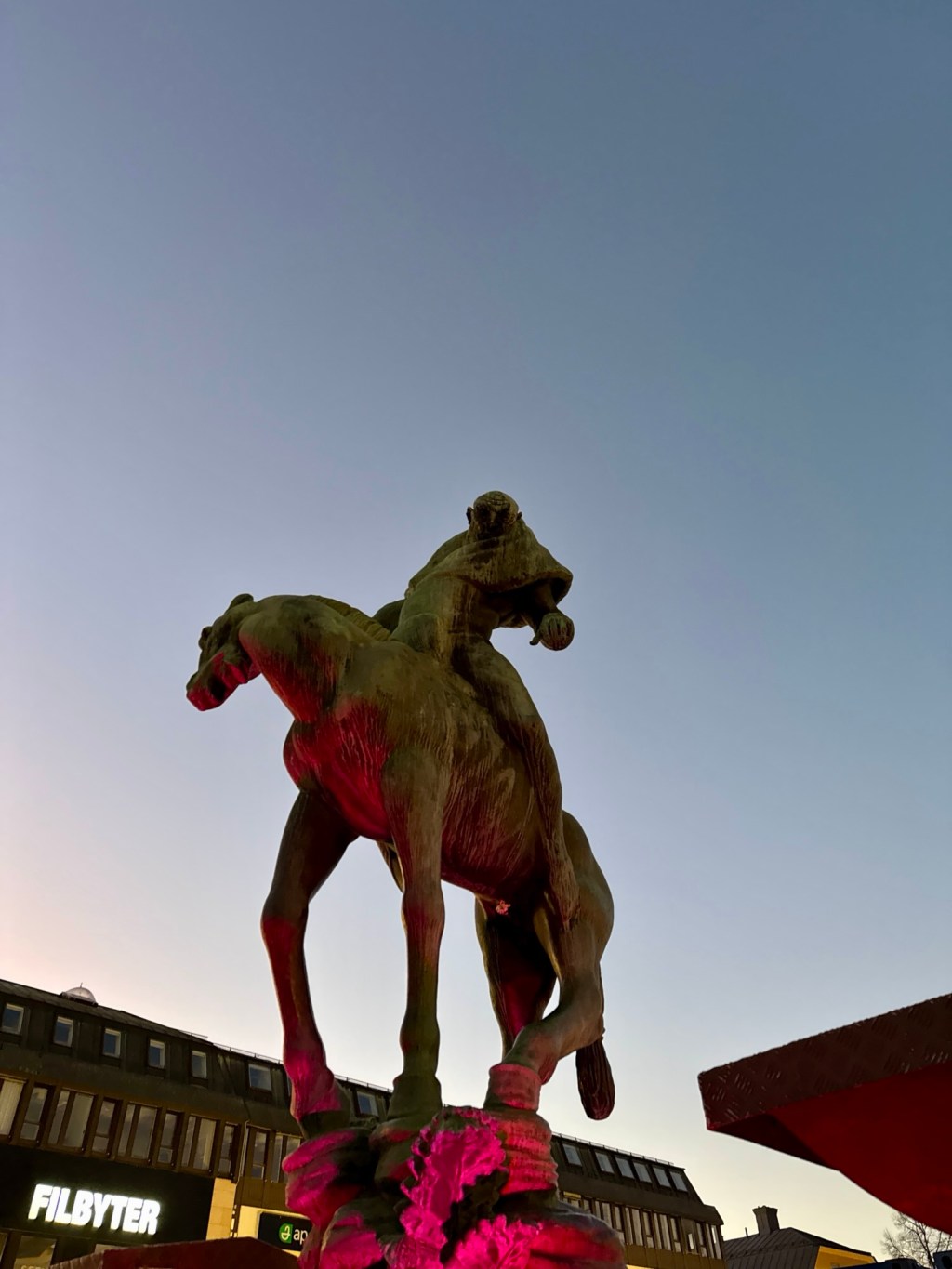
🗿 Folkunga Fountain (Folkungabrunnen) – Linköping
Carl Milles’ statue of Folke Filbyter on horseback, slipping between worlds.
📍 Stora Torget, Linköping
🎨 Millesgården – Stockholm
Home of sculptor Carl Milles; includes a replica of the Folke Filbyter statue.
🔗 Millesgården official site
🏺 Swedish History Museum – Stockholm
Viking Age collections, early Christian grave goods, and runestones.
🔗 Historiska museet – free entry
⚰️ Gamla Uppsala – Uppsala
Three great burial mounds, royal halls, and the thing – before and after Christianity.
🔗 Gamla Uppsala museum
Runestones mentioned
- Vänge Runestone (U 905) – raised by Þorgerðr (“Thor’s protection”) with a Christian cross. Visible outside Vänge church, Uppsala County.
- Morby Runestone – raised by Gullög for her daughter Gillög’s soul.
📖 Sources & Further Reading
- Adam of Bremen – Gesta Hammaburgensis ecclesiae pontificum (c. 1075) – the original temple description.
- Sawyer, Birgit & Peter – The Dead Still Speak (Christian History, 1999) – runestones and conversion.
- Ljung, Cecilia – Transforming Heaven and Earth (Uppsala University, 2025–2028) – local communities and conversion.
- Verner von Heidenstam – Folkungaträdet (1905–1907) – the novel that shaped the Folke Filbyter legend.
- Project Samnordisk Runtextdatabas – Rundata entries for all runestones.
🧠 Key Takeaways
- Christianity wasn’t just a faith – it was a system
Tithes, bishops, land ownership, and centralized authority replaced local, flexible worship. - Resistance was real
Kings like Blot-Sweyn and legends like Folke Filbyter show that not everyone accepted the new god quietly. - The “temple at Uppsala” probably didn’t exist
Adam of Bremen’s lurid account is not supported by archaeology. The old religion used halls, not dedicated temples. - Runestones show the transition
Pagan names + Christian crosses. Bridges built for souls. A family caught between two worlds. - The past is always political
In the 1900s, Folke Filbyter became a nationalist symbol. Today, Thor’s hammer is used by white supremacists. Stories are never neutral.
💬 Quote
“The Church didn’t just want wealth. It wanted control. Control over belief. Control over practice. Control over the stories people told about the world.”
“Folke Filbyter is a legend. He is a story. He is a man on a horse, frozen in bronze, searching forever.”
🔁 Share the Episode
If this episode resonated with you:
- 🎧 Follow the podcast so you don’t miss the next one
- 📤 Share with a friend who loves slow, thoughtful history
- ✍️ Leave a review – it helps others find the show
🎙️ Coming Next Episode
Episode 10 – The Women of the Viking Age
The ones who traveled, traded, fought, and ruled. The ones who have been waiting for us to see them.
🏁 Final Thought
“The old gods are gone. Or they’re not. They survive in the names of days, Wednesday for Odin, Thursday for Thor, Friday for Freyr. They survive in a fountain in Linköping, where a man on a horse searches for something he will never find.”
Until next time, keep looking beyond the Swedish postcard.

 Swedish Wanderlust