Day 2 of 26: Places I Can’t Wait to Visit
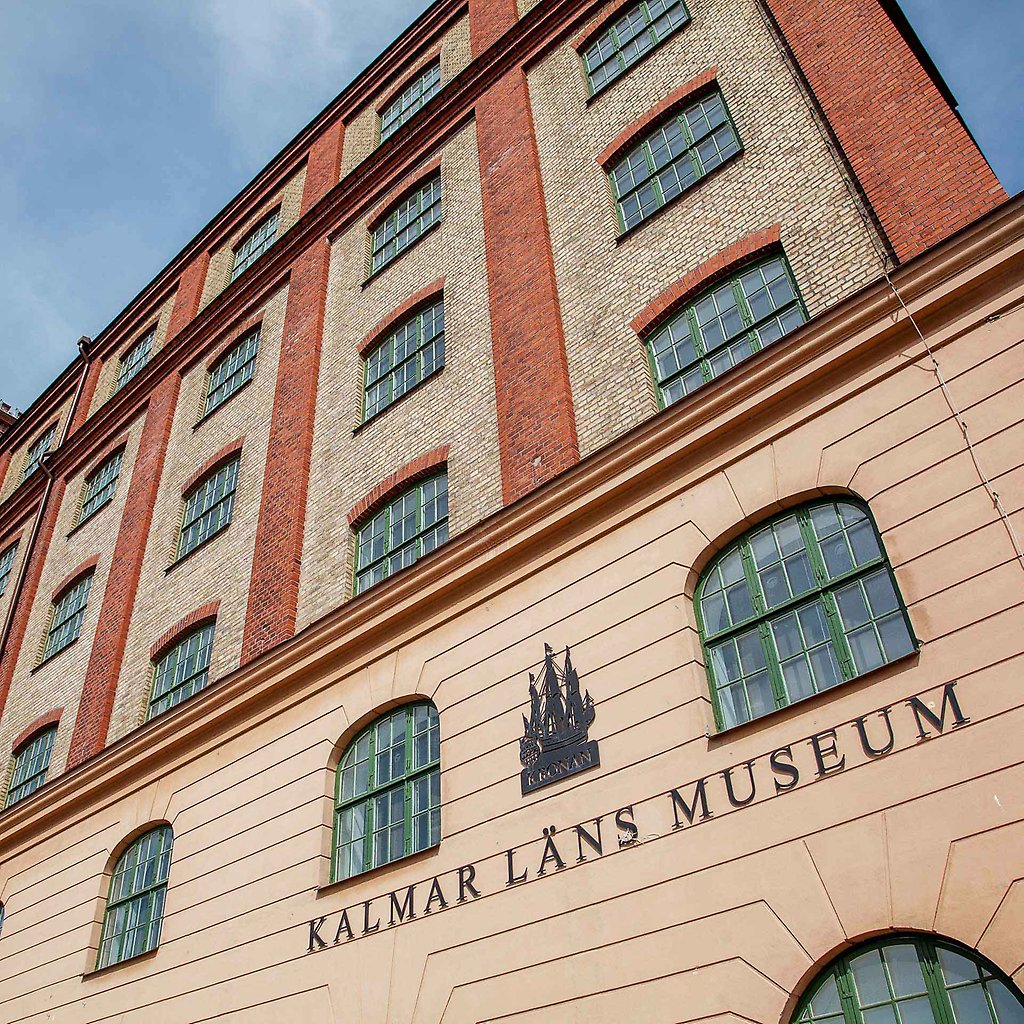
Kalmar County Museum is one of the places I’m most excited to visit during our upcoming summer trip to Kalmar and Öland. Kalmar County Museum is home to some of Sweden’s most extraordinary archaeological discoveries, including the world famous Sandby borg exhibition, the incredible Kronan shipwreck treasures, and exhibitions that tell the story of southeastern Sweden from prehistory to the modern day.
Yesterday, I shared the story of Sandby borg, the mysterious Iron Age ringfort on Öland where an entire community was massacred more than 1,500 years ago. If you have not read that yet, you can click here. Researching that article completely captivated me. The more archaeological reports I read and the more discoveries I uncovered, the more I realized there was one place I simply couldn’t leave off our itinerary.

While Sandby borg is where one of Sweden’s greatest archaeological mysteries unfolded, the museum is where many of the discoveries made at the site have found a home. It’s where centuries of history, archaeology, and scientific research come together to tell a story that is still being written today.
But Sandby borg is only one reason this museum has climbed to the top of my must visit list.
The museum is also home to the remarkable story of the Kronan, one of the largest warships ever built for the Swedish Empire. After sinking during the Battle of Öland in 1676, the Kronan rested beneath the Baltic Sea for more than 300 years before becoming one of the richest and most important underwater archaeological discoveries in Europe.
As someone who has always loved history, archaeology, and genealogy, I already know I’ll be the person reading every information panel, studying every artifact, and probably asking my husband to wait “just five more minutes” more times than he’ll be able to count.
Fortunately, I think he already expects that.
A Museum That’s Much More Than a Museum
One of my favorite parts of traveling is visiting places that help me better understand the history of the places I’m exploring.
Museums have a way of connecting us with people who lived hundreds or even thousands of years ago. A piece of jewelry isn’t simply an object behind glass. It once belonged to someone. A coin passed through countless hands before ending up in the ground. Even the smallest artifact has a story waiting to be told.
From everything I’ve read, Kalmar County Museum seems to embrace exactly that philosophy.
The museum is housed inside Ångkvarnen, a beautifully restored steam mill built in the late nineteenth century along Kalmar’s waterfront. Instead of allowing the building to disappear into history itself, it was carefully preserved and transformed into one of Sweden’s finest regional museums.
I love when historic buildings are given a second life.
Long before I step inside my first exhibition, I’ll already be surrounded by history.
From there, I’ll be able to explore thousands of years of Swedish life under one roof. The museum’s exhibitions span everything from prehistoric archaeology and Iron Age communities to maritime history, local culture, fine art, and ongoing archaeological research.
It doesn’t sound like the kind of museum you visit simply to check it off a list.
It sounds like the kind of place where you lose track of time because every exhibit leaves you wanting to learn just a little bit more.
Those are always my favorite kinds of museums.
Sandby borg: Where the Story Continues
Yesterday, I took you to Sandby borg, one of Sweden’s most haunting archaeological sites. Standing inside the ringfort will undoubtedly be a powerful experience, but I think visiting the Kalmar County Museum first will add an entirely new layer to that experience.
While the ruins tell us where the tragedy happened, the museum will tell me who these people were.
This is where I’ll have the opportunity to see many of the artifacts recovered during years of careful archaeological excavations. These discoveries don’t simply represent objects buried in the ground for more than 1,500 years. They represent the lives of the people who called Sandby borg home before violence brought their community to an abrupt end.
One of the artifacts I’m especially looking forward to seeing is the famous relief brooch discovered at the site. Beautifully crafted and exceptionally rare, it reflects the remarkable skill of Iron Age artisans and serves as a reminder that Sandby borg was once a prosperous settlement with connections extending far beyond the shores of Öland.
The excavations have also uncovered Roman gold coins, glass beads, jewelry, tools, and everyday household items that paint a picture of a thriving community during the Migration Period.
Every artifact tells part of a larger story.
The Roman coins reveal long distance connections that linked this small island community with the wider European world.
The jewelry demonstrates extraordinary craftsmanship.
Even ordinary objects offer archaeologists valuable clues about daily life inside the ringfort.
As someone who loves archaeology, I think there’s something incredibly special about standing in front of an object that hasn’t simply been read about in a book but was actually held, worn, or used by someone who lived fifteen centuries ago.
Those moments have a way of making history feel real.


A Story That Is Still Being Written
One of the things that fascinates me most about Sandby borg is that it isn’t just an archaeological site.
It’s an active investigation.
Although archaeologists have learned an incredible amount since excavations began in 2010, many of the biggest questions remain unanswered.
Who attacked the settlement?
Why was every visible victim left where they fell?
Why was the ringfort never reoccupied after the massacre?
What happened to the people who weren’t inside the fort that day?
Those questions continue to drive new research, and every excavation season has the potential to uncover another piece of the puzzle.
That’s one of the reasons I’m so excited to visit the museum.
The Sandby borg exhibition forms part of Borgarnas ö, or The Island of the Ringforts, an ongoing exhibition exploring Öland’s unique collection of Iron Age ringforts. Rather than remaining static, the exhibition evolves as archaeologists make new discoveries and develop new interpretations of the evidence.
I love that approach.
History isn’t something that was written once and placed on a shelf.
It’s constantly being refined as new evidence comes to light.
That means every visit has the potential to be a little different from the last.
Seeing History Through a Different Lens
Researching Sandby borg has changed the way I think about archaeology.
Before writing yesterday’s article, I knew very little about the site. Now, I find myself looking at every new discovery with a different perspective.
Instead of seeing anonymous skeletons or ancient artifacts, I see families.
Children.
Craftsmen.
Neighbors.
People who had hopes, fears, and routines just like we do today.
I think that’s why I’m looking forward to the Kalmar County Museum so much.
Seeing the actual artifacts and learning more about the people behind them will make the story feel even more personal than reading archaeological reports ever could.
It’s one thing to study history from photographs on a computer screen.
It’s another thing entirely to stand in front of the objects themselves and realize they survived when the people who owned them did not.
I have a feeling this exhibition will be one of the most moving parts of our entire trip.
Kronan: The Warship That Changed Swedish History


If Sandby borg is the museum’s connection to Sweden’s distant past, then the Kronan tells a story that feels almost cinematic.
Before I started researching this museum, I had never heard of the Kronan.
Now, I can’t wait to stand face to face with the artifacts recovered from what became one of the greatest maritime disasters in Swedish history.
Commissioned by King Charles XI, the Kronan was one of the largest and most powerful warships in the world during the seventeenth century. At nearly 53 meters (174 feet) long and armed with more than 100 bronze cannons, she was designed to project the military strength of the Swedish Empire across the Baltic Sea.
The ship wasn’t simply a warship.
It was a symbol of Sweden’s growing power.
When Kronan sailed into battle, she represented the pride, wealth, and ambition of an empire determined to defend its place as one of Europe’s great powers.
No one could have imagined how quickly that story would change.
Disaster in the Baltic Sea
On June 1, 1676, Kronan joined the Swedish fleet during the Battle of Öland as part of the Scanian War.
As the fleets maneuvered in strong winds and rough seas, the Kronan attempted a sharp turn.
It would prove to be a fatal decision.
The ship heeled dramatically to one side, exposing its open gunports to the sea. Water rushed into the lower gun deck, throwing the enormous vessel dangerously off balance.
Then came the explosion.
The ship’s gunpowder magazine detonated with tremendous force, ripping through the vessel before she disappeared beneath the Baltic Sea.
The Kronan sank in only a matter of minutes.
Of the approximately 850 officers, sailors, soldiers, and crew members on board, only around forty survived.
More than eight hundred lives were lost in a single afternoon.
It remains one of the deadliest maritime disasters in Swedish history.
Whenever I read about events like this, I try to picture the people rather than the statistics.
Young sailors who had never seen battle before.
Experienced officers responsible for hundreds of lives.
Men who expected to return home to their families.
Within minutes, nearly all of them were gone.
Lost for Three Centuries
After the explosion, the Baltic Sea kept its secret for more than 300 years.
The wreck lay undisturbed off the coast of Öland until 1980, when marine archaeologists finally located the remains of the Kronan.
What followed became one of the largest underwater archaeological projects ever undertaken in Sweden.
Decade after decade, divers carefully explored the wreck site, recovering extraordinary objects that had remained hidden beneath the sea since the seventeenth century.
To date, more than 30,000 artifacts have been brought to the surface.
Just imagining that number is incredible.
Every dive has added another chapter to the story.
Another artifact.
Another clue.
Another glimpse into life aboard one of Europe’s most powerful warships.
Treasures That Tell Human Stories
The Kronan yielded spectacular collections of gold and silver coins, including Sweden’s largest marine gold coin hoard. Massive bronze cannons, weapons, navigational instruments, and beautifully crafted objects recovered from the wreck are now among the museum’s most treasured collections.
Those discoveries alone would make the exhibition worth visiting.
But I suspect the artifacts that will stay with me the longest won’t be the gold.
They’ll be the ordinary belongings.
A shoe.
A spoon.
A pipe.
A comb.
Perhaps a simple wooden bowl.
Objects that belonged to people who climbed aboard the Kronan expecting another day at sea, never realizing they were living their last.
Those are the moments that make archaeology so powerful.
It’s easy to admire treasure.
It’s much harder to forget the lives behind it.
More Than a Shipwreck
One of the things I appreciate most about the Kalmar County Museum is that it doesn’t simply display the Kronan as a collection of remarkable artifacts.
It tells the story of the people.
The sailors.
The soldiers.
The officers.
The craftsmen who built one of the greatest warships of its time.
The conservators who continue preserving these discoveries today.
Every recovered object helps historians better understand what life was like aboard a seventeenth century warship, from the food the crew ate to the tools they used, the weapons they carried, and even the personal possessions they kept close.
When I finally visit the exhibition, I know I’ll be looking beyond the gold and the cannons.
I’ll be thinking about the people.
Because, just like Sandby borg, the Kronan isn’t simply a story about tragedy.
It’s a story about lives interrupted, memories preserved, and history patiently waiting beneath the surface until someone was able to tell it once again.
Jenny Nyström: The Artist Behind Sweden’s Beloved Tomte


After exploring stories of massacres, shipwrecks, and archaeological mysteries, I think I’ll be ready for something completely different.
One exhibition I’m especially looking forward to discovering is dedicated to Jenny Nyström, one of Sweden’s most celebrated artists.
Although her name may not be familiar to everyone outside Scandinavia, her work almost certainly is.
Born in Kalmar in 1854, Jenny Nyström is widely credited with creating the modern image of the Swedish tomte, the cheerful red-capped figure who has become one of Sweden’s most recognizable Christmas traditions. Her illustrations have appeared on postcards, books, calendars, and decorations for generations, helping shape the way countless families imagine Christmas.
What I find fascinating is that her career extended far beyond holiday illustrations.
She was an accomplished painter, illustrator, and storyteller whose work captured everyday Swedish life with warmth, humor, and incredible attention to detail. Her paintings offer a glimpse into a Sweden that was rapidly changing during the late nineteenth and early twentieth centuries while preserving traditions that are still celebrated today.
After spending time immersed in stories of war and tragedy, I think this exhibition will provide the perfect reminder that history isn’t only shaped by dramatic events.
Sometimes it’s shaped by artists whose work quietly becomes part of a nation’s identity.
Behind Every Artifact Is Years of Care
One of the things I’ve come to appreciate while researching Swedish archaeology is that discovering an artifact is only the beginning of its journey.
Recovering an object from the ground or the sea is exciting, but preserving it so future generations can learn from it often takes years of painstaking work.
That’s another reason I’m looking forward to visiting the Kalmar County Museum.
The museum doesn’t simply display artifacts. It also gives visitors the opportunity to learn about the conservation process and the remarkable work that takes place behind the scenes.
Imagine recovering a wooden object that has spent more than 300 years beneath the Baltic Sea.
The moment it’s exposed to air, it begins to deteriorate unless conservators carefully stabilize and preserve it.
The same is true for iron, leather, textiles, and countless other materials recovered during archaeological excavations.
It’s meticulous work that often goes unnoticed by visitors.
Yet without it, many of the incredible discoveries from Sandby borg and the Kronan would never survive long enough to be displayed.
I think that’s one of the reasons museums deserve so much appreciation.
They’re not simply places where history is displayed.
They’re places where history is protected.
More Than Incredible Exhibitions
While Sandby borg and the Kronan are the exhibitions that first caught my attention, the Kalmar County Museum has so much more to offer.
The museum’s collections include more than 100,000 objects, spanning everything from prehistoric archaeology to modern cultural history.
Visitors can also explore temporary exhibitions that change throughout the year, meaning there’s always something new to discover.
Families traveling with children will find SuperKronan, an interactive exhibition that introduces younger visitors to maritime history through hands-on activities inspired by the famous warship.
The museum also hosts lectures, guided tours, workshops, and special events that allow visitors to dive even deeper into Sweden’s history and archaeology.
From everything I’ve read, this isn’t the kind of museum where you simply walk through a few galleries and leave.
It’s a place where curiosity is rewarded.
The more questions you ask, the more fascinating the experience becomes.
And if you’re anything like me, you’ll probably leave with even more questions than you arrived with.
Planning My Visit
One of the things I appreciate about planning this trip is how easy it will be to include the Kalmar County Museum as part of a full day exploring the city.
Located on Kalmar’s waterfront at Skeppsbrogatan 51, the museum is just a short walk from Kalmar Castle, one of Sweden’s best-preserved Renaissance castles. The historic city center, waterfront promenade, restaurants, cafés, and shops are all nearby, making it easy to spend an entire day discovering Kalmar at a relaxed pace.
I’m already picturing the day.
Starting the morning surrounded by archaeological discoveries.
Taking a break for Swedish fika at the museum café.
Then strolling through Kalmar’s historic streets before ending the afternoon at the castle.
Honestly, it sounds like my perfect day.
Final Thoughts
When we first started planning our summer trip, I knew Kalmar Castle and Öland would be highlights.
I didn’t expect one museum to capture my imagination quite like this.
From the haunting story of Sandby borg to the incredible discoveries recovered from the Kronan, the Kalmar County Museum promises to be one of the places I’m looking forward to visiting the most.
In just a few weeks, I’ll finally get to walk through the galleries I’ve spent so much time reading about.
I’ll see the artifacts that have filled archaeological reports, documentaries, and history books.
I’ll stand in front of discoveries that have fascinated researchers for decades.
And if this museum is even half as impressive in person as it has been during my research, I have a feeling it will be one of the highlights of our entire journey through Kalmar and Öland.
I can’t wait to experience it for myself.
Join Me Tomorrow for Day 3
There are now 24 days until we head to Kalmar and Öland, and my excitement is only growing.
Tomorrow, I’ll be sharing another place that’s made its way onto my must visit list.
I hope you’ll come along for the journey.

You must be logged in to post a comment.