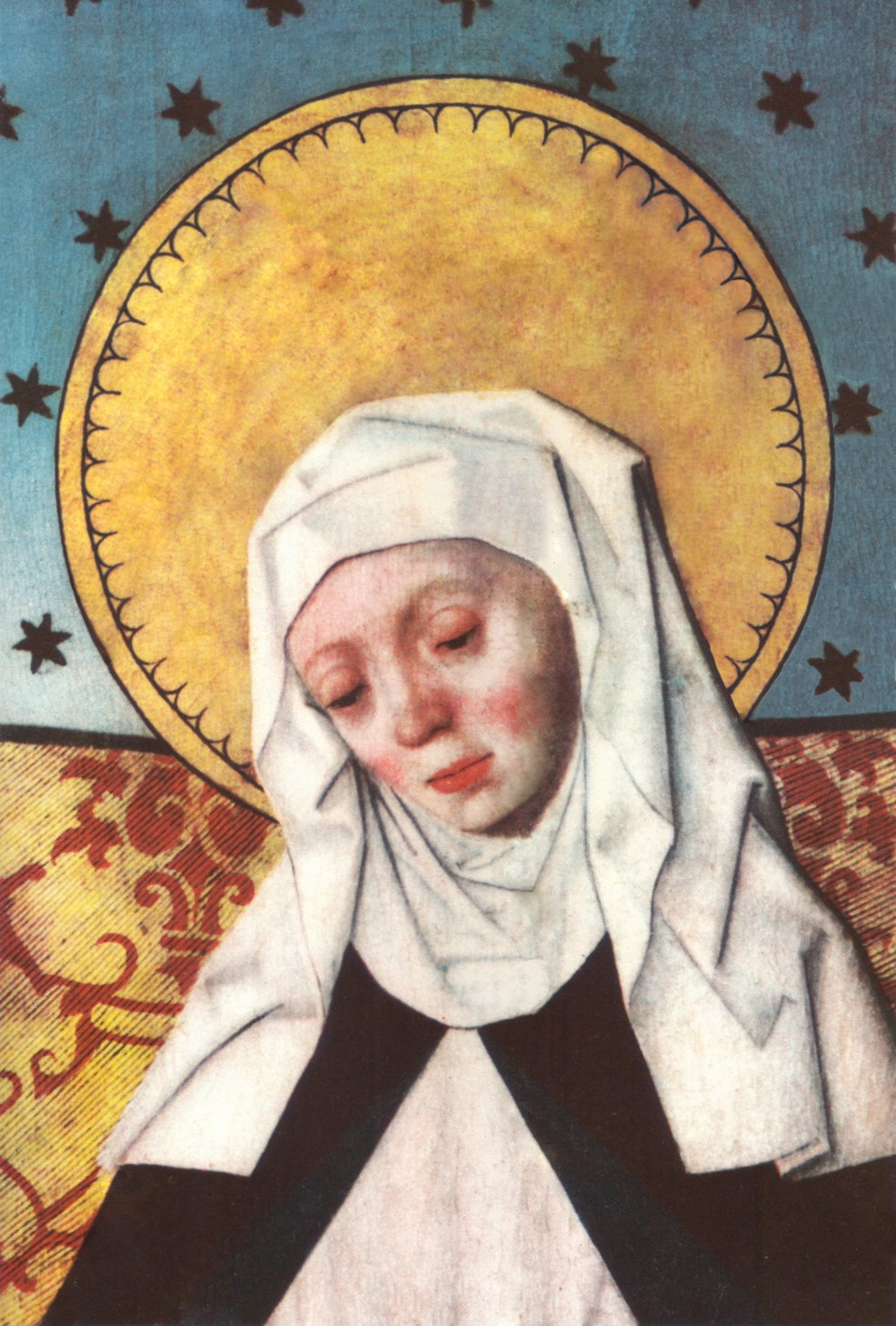
Podcast: Beyond the Swedish Postcard
Episode Focus: The story of Birgitta Birgersdotter ; mystic, mother of eight, lawspeaker for God, and one of the most influential women in medieval European history. How Saint Birgitta Built a Nation
“She was not just a mystic. She was a lawspeaker…”
🎧 Listen to the Episode
📸 Images


🧭 Episode Summary
In 1344, a widow sat alone in a small stone house near Alvastra monastery. She was forty-one years old. A mother of eight. She had just buried her husband.
Then she began to hear a voice.
The voice claimed to be Christ. It called her “My bride.” It gave her a mission: reform the Church, speak truth to power, found a new religious order. And for the next twenty-nine years, Birgitta Birgersdotter did exactly what that voice told her to do.
This episode explores:
- The lawman’s daughter – growing up in the house of a lawspeaker, learning that words change reality
- The voice at Alvastra – her first visions, the death of her husband, and the command to become God’s mouthpiece
- The first great writer in Swedish – how Birgitta created the Swedish literary language
- The political mystic – telling the king he was failing, and demanding Vadstena Abbey
- The prophet in Rome – demanding the pope return from Avignon, extreme asceticism, the pilgrimage to Jerusalem
- The order and the legacy – the Bridgettines, the design of Vadstena, and the possible roots of Swedish minimalism
📍 Places Mentioned
Finsta – Uppland
Birgitta’s birthplace (1303). The family estate where she grew up in the house of a lawspeaker.
Alvastra Monastery – Östergötland
Cistercian monastery on Lake Vättern. Ulf died here. Birgitta lived in a small stone house nearby and began dictating her revelations.
Ulvåsa – Östergötland
The estate Birgitta managed during her marriage. She raised eight children here.
Vadstena Abbey – Östergötland
The double monastery Birgitta founded. Royal land granted by King Magnus Eriksson in 1346. Her body is interred here. The abbey still stands.
Rome – Italy
Birgitta spent her last twenty-three years here, demanding the pope return from Avignon. She died here in 1373.
Jerusalem
Birgitta made a pilgrimage here at nearly seventy years old. She dictated her vision of the Nativity in the Holy Land.
📖 Sources & Further Reading
Primary sources:
- Birgitta of Sweden. The Revelaciones (Celestial Revelations) – over six hundred dictated visions
- The Life of Saint Birgitta – written by her confessors
Secondary sources:
- Sahlin, Claire. Birgitta of Sweden and the Voice of Prophecy
- Wollin, Lars. Birgitta and the Creation of the Swedish Literary Language
- Jönsson, Arne. The Latin Translations of Birgitta’s Revelations
- Harrison, Dick. Sveriges historia: 1350–1400 (in Swedish)
- Morris, Bridget. St. Birgitta of Sweden
DNA study (2014):
- Kjellström, A., et al. Identification of Saint Birgitta of Sweden and Saint Catherine of Sweden – Journal of Archaeological Science
🧠 Key Takeaways
1. Birgitta grew up in the house of a lawspeaker.
Her father, Birger Persson, recited the entire Uppland Law from memory. She learned that words change reality.
2. She was a mother of eight.
Married at thirteen. Managed one of Sweden’s largest estates. Served as advisor to the king.
3. Her first vision came at age seven.
A lady in shining clothes offered her a crown. At ten, she saw the crucified Christ.
4. The voice began at Alvastra in 1344.
After Ulf’s death, Christ called her “My bride” and commanded her to speak for him.
5. She dictated over six hundred revelations.
The Celestial Revelations cover theology, politics, monastery design, and the fate of individual souls.
6. She wrote in Old Swedish.
Before Birgitta, Swedish was not a written literary language. She created it.
7. Her Latin translators may have softened her voice.
The original Swedish was likely sharper, more direct, more accusatory.
8. She told the king he was failing.
Magnus Eriksson – a “child playing with a knife.” She demanded Vadstena Abbey. He granted it in 1346.
9. She buried two children during the Black Death.
From Rome, unable to return. She kept speaking.
10. She spent twenty-three years in Rome.
Demanding the pope return from Avignon. Feeding the poor. Nursing the sick.
11. Her asceticism was extreme.
Burning wax, gentian root, cold stone floors. Suffering as authority.
12. Her vision of the Nativity reshaped Christian art.
Mary kneeling. The baby on the ground. The light.
13. She founded the Bridgettine Order.
A double monastery – nuns and monks – with the abbess in supreme authority. Revolutionary.
14. She may be a root of Swedish minimalism.
Plain stone. No ornament. Light. Space. Silence.
15. DNA confirmed her remains in 2014.
The red velvet casket at Vadstena holds Birgitta and her daughter Catherine.
💬 Quotes
“She was not just a mystic. She was a lawspeaker for God.”
“The daughter of the lawspeaker was dictating rulings from the highest court of all.”
“Before Birgitta, there was no model for how to write complex, expressive, theological Swedish. She created it.”
“She told the king he was failing. And got away with it.”
“The first great Swedish visionary didn’t want gold and ornament. She wanted light. She wanted space. She wanted silence.”
“She was not an easy woman. She was not always likeable. She was fierce. She was demanding. She was utterly convinced that she spoke for God.”
“The woman in the icon is a saint. But the woman in the ground? She was a revolutionary.”
🗣️ Pronunciation Guide
- Birgitta Birgersdotter – bir-GIT-tah BEER-gers-dot-ter
- Ulf Gudmarsson – OOLF GOO-mar-son
- Alvastra – al-VAS-trah
- Vadstena – VAD-steh-nah
- Ulvåsa – OOL-voh-sah
- Finsta – FIN-stah
- Vättern – VET-ern
- lagman – LAHG-man
- Ting – TING
- Uppland – OOP-land
- Västergötland – VEST-er-yuht-land
- Revelaciones – reh-veh-lah-see-OH-nays
- Bridgettine – bri-JET-een
🔁 Share the Episode
If Birgitta’s story moved you – if it made you think differently about the power of a single voice:
- 🎧 Follow the podcast so you don’t miss the next episode
- 📤 Share with a friend who loves medieval history, women’s history, or Swedish culture
- ✍️ Leave a review – it helps others find the show
🎙️ Coming Next
Episode 15 – The Battle of Visby (1361)
Back to Gotland. Eleven years after the Black Death. A Danish king named Valdemar Atterdag sails into Visby with a professional army.
What follows is one of the most brutal battles in Scandinavian history. Mass graves outside the city walls. Farmers slaughtered in their hundreds. Skeletons still wearing their chainmail.
And the mystery: did Visby really fill three barrels with gold to save itself?
That’s next time.
🏁 Final Thought
“I want you to sit with her for a moment. Not the saint in the icon. Not the serene woman with her eyes turned toward heaven.
The other Birgitta. The older woman. The one whose face was etched with exhaustion. The one who buried two of her children during a plague and kept speaking. The one who looked at the most powerful men in her world and told them, without hesitation, that they were failing.
She was not an easy woman. She was not always likeable. She was fierce. She was demanding. She was utterly convinced that she spoke for God.
And in a century when women’s voices were rarely heard in public, she made herself heard.”
Until next time, keep looking beyond the Swedish postcard.
— JB

You must be logged in to post a comment.